
Powder Metallurgy: From Metal Powder to Finished Components

Manufacturing Process
Powder metallurgy is an efficient manufacturing process for producing precision metal components with consistent quality and repeatable performance. It is widely used for products such as bushings, bearings, flanges, gears, structural parts, and other customized metal components.
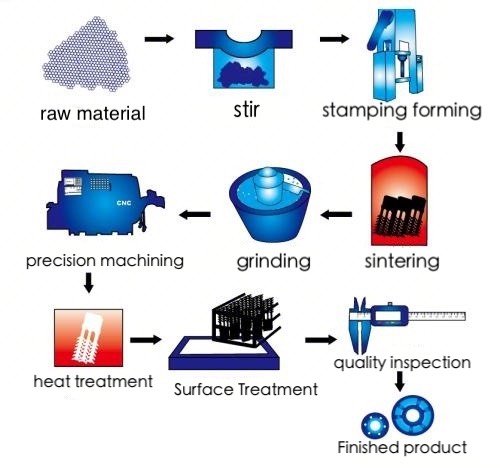
Our powder metallurgy manufacturing process consists of several carefully controlled stages, from powder preparation to final inspection. Each step contributes to the dimensional accuracy, mechanical properties, surface quality, and overall reliability of the finished product.
1. Powder Preparation
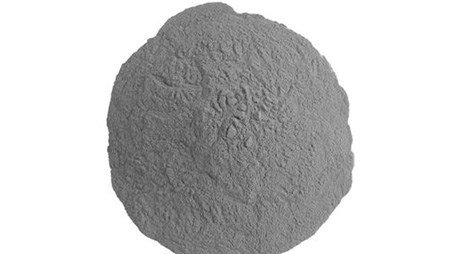
The process begins with the preparation of metal powder.
Depending on the required material and application, different metal powders and alloying elements can be selected and mixed according to the specified material composition. Proper powder characteristics, including particle size, shape, and flowability, are important for achieving stable production results.
For bronze, iron-based, copper-based, and other powder metallurgy materials, the powder formulation is adjusted according to the required mechanical properties and application requirements.
2. Powder Filling
After the powder is prepared, it is accurately filled into the mold cavity.
The amount and distribution of powder need to be carefully controlled because they directly affect the density and dimensional consistency of the compact. Proper powder filling helps ensure stable results during the subsequent pressing process.
3. Compaction
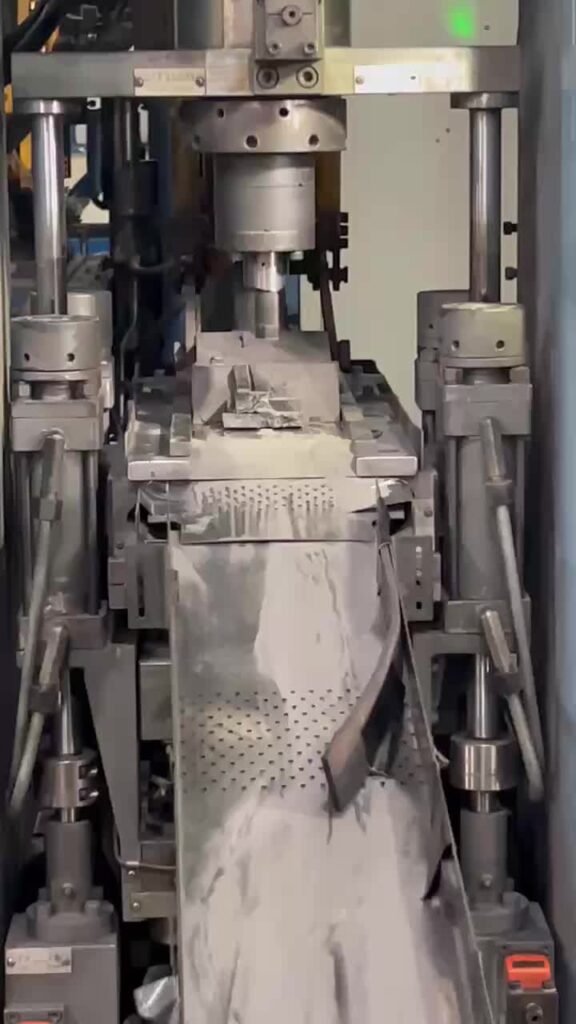
The filled powder is then compressed under high pressure using a powder metallurgy press.
During compaction, the loose metal powder is transformed into a compact with the basic shape of the required component. The pressing parameters and mold design are important factors in controlling the density, dimensions, and shape of the compact.
At this stage, the component has sufficient strength for handling, but it has not yet reached its final mechanical properties.
4. Semi-Finished Inspection
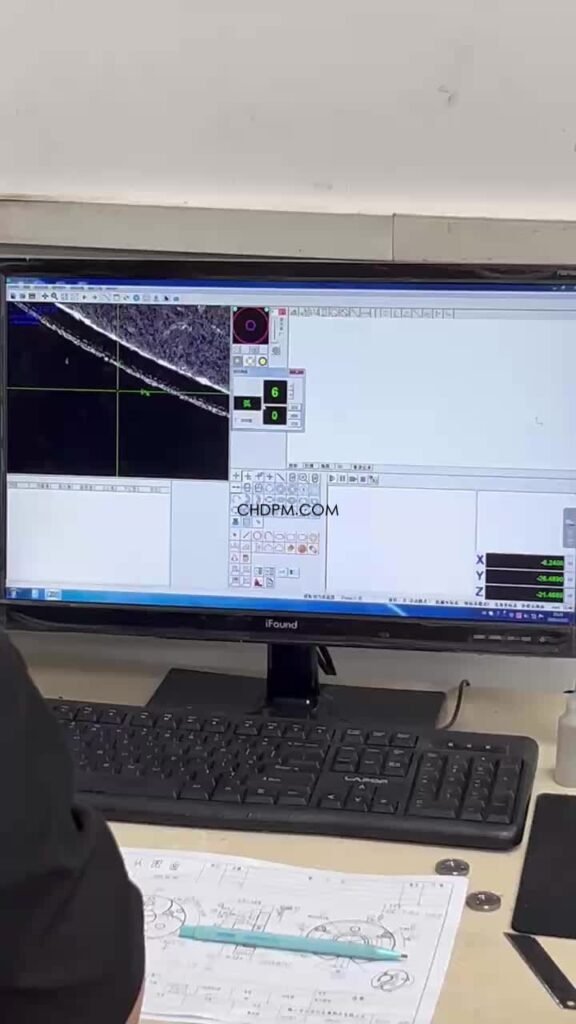
After pressing, the compact undergoes a preliminary inspection.
Key dimensions and appearance are checked to identify potential problems at an early stage. This helps prevent defective parts from continuing into the sintering process and improves overall production efficiency.
Depending on the product requirements, inspection may include dimensional checks, weight checks, visual inspection, and other process controls.
5. Sintering
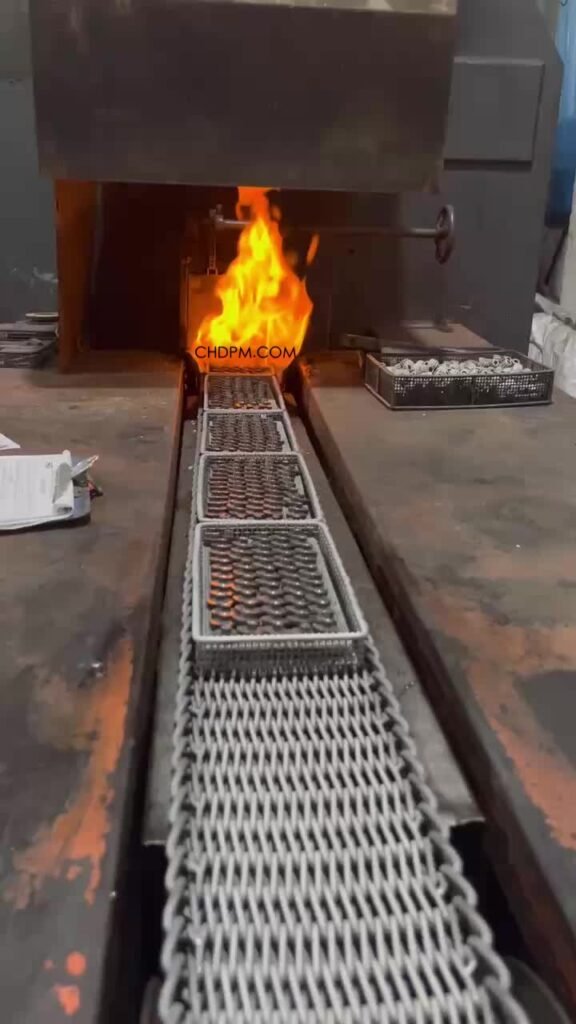
Sintering is one of the most important stages of powder metallurgy manufacturing.
The pressed compact is heated in a controlled atmosphere at a temperature below the melting point of the main metal.During heating, the powder particles bond together and the component develops its required strength and structural integrity.
Sintering parameters such as temperature, heating rate, holding time, and atmosphere must be carefully controlled. These factors can significantly influence the final density, hardness, dimensional stability, and mechanical performance of the component.
6. Secondary Machining and Finishing
Some powder metallurgy components can be used directly after sintering, while others require additional machining to achieve tighter dimensional tolerances or specific surface features.
Depending on the product design, secondary operations may include turning, drilling, reaming, grinding, sizing, chamfering, or other precision machining processes.
This stage allows us to achieve the required dimensions and functional characteristics for customized components.
7. Cleaning
After machining and processing, the components are thoroughly cleaned.
Cleaning removes machining residues, oil, dust, and other contaminants from the surface. Proper cleaning is particularly important for components that will be assembled into mechanical systems or require a clean surface for subsequent treatment or packaging.
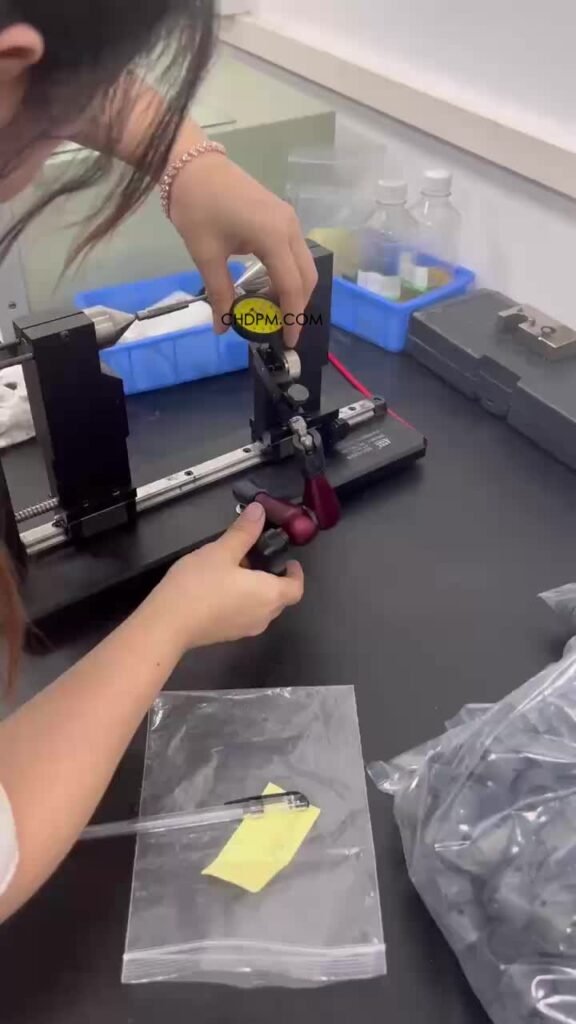
8. Final Inspection
Before shipment, finished components undergo final quality inspection.
Inspection requirements depend on the product and customer specifications and may include dimensional inspection, visual inspection, weight measurement, hardness testing, and other quality checks.
The purpose of final inspection is to ensure that the finished components meet the specified drawings, tolerances, material requirements, and quality standards.
9. Finished Products
After passing the final inspection, the components are classified as finished products and prepared for packaging and shipment.
By controlling each stage—from powder preparation and compaction to sintering, machining, cleaning, and final inspection—we can achieve consistent production quality and provide reliable powder metallurgy components for different industrial applications.

Why Choose Powder Metallurgy?
Powder metallurgy offers several advantages for mass production and customized metal components:
1:Efficient material utilization with low material waste
2:Consistent and repeatable production
3:Suitable for complex component geometries
4;Good dimensional consistency
5:Suitable for high-volume production
6:Flexible material selection
7:Can reduce machining requirements
8:Suitable for producing bushings, bearings, gears, flanges, and other precision components
Conclusion
A reliable powder metallurgy product depends not only on the pressing and sintering processes, but on the control of the entire manufacturing chain.
From powder preparation → powder filling → compaction → semi-finished inspection → sintering → secondary machining → cleaning → final inspection → finished products, every stage plays an important role in achieving stable quality and reliable performance.
For customers looking for customized powder metallurgy components, controlling the complete manufacturing process is essential for achieving consistent dimensions, material properties, and product quality.